


Strip Any Wrap.
Any Adhesive. Faster.
Pro-grade, low-odor removers trusted by fleet and sign shops nationwide.
 Made in USA
·⭐4.68 from 110+ pros
·Free shipping $250+
Made in USA
·⭐4.68 from 110+ pros
·Free shipping $250+
 Safety Data Available
 Low-Odor Formula
 Used by Fleet & Sign Shops
 Satisfaction Guaranteed
Which Remover Do You Need?


Save with the Complete Kit
Let customers speak for us
Love the products here

Makes decal jobs so much easier

Always easy to order and check out. Fast delivery as well!
This is a STAPLE product in our shop!!

Muchas gracias
I had some spots that were super sun faded & hard to remove - this made it a breeze!
I was a bit apprehensive about this purchase. I was tired of being disappointed by another company saying this is it. However, I was amazed by how this product delivered on the first try. It does what it says it will do and you don't need a lot. I would highly recommend to family and friends. Give it a try and be amazed.
Used to remove my cracked 8 year old vinyl door edge guards. Took a few applications and worked as advertised.
great product

So we have used this product before but we finally realized it's full potential as a remover. The key on large printed graphics on a semi trailer is to brush it on fairly heavy with a foam roller. Wait 45 minutes, apply another wet coat. After 1.5-2 hours then it becomes very pliable and the vinyl is rejuvenated again for removal. Saved us many hours of scraping this terrible old brittle vinyl when it was rehydrated again and came off like it should!
This vinyl remover coupled with the plastic scraper had my old sea ray stickers off in a jiffy.
This stuff is exactly what I was looking for! I had removed the lettering from almost 12 years in the FL sun but the adhesive stayed behind even though I used a heat gum and scraper. This is the only product that removed the rest of the adhesive. Now I just need to buff and wax from the fading of all those years.

Removing a tar light rubber and it’s definitely doing the job.
So easy shopping on-line after reading and watching all the videos.
I have a 2006 Monaco Knight with 3M Diamond Shield that's been looking bad for about 10 years. I've tried just about everything with no results. I've called another company who claims to have the best product along with filling out a form to request their product with no results of even a return phone call or confirmation of them receiving the on line request. I then purchased a small bottle of Adhesive-Off Pro . and have to say, I wish I did this 3 weeks ago. It would have saved me a lot of time and paint scuffing to the small section I've been wording on for the past three weeks. This Adhesive-Off Pro is GREAT! I finally finished the small section I've been working on and ready to start & finish the rest of the removal I almost gave up on. THAT YOU Brothers Chemical Team. Mc
See It in Action
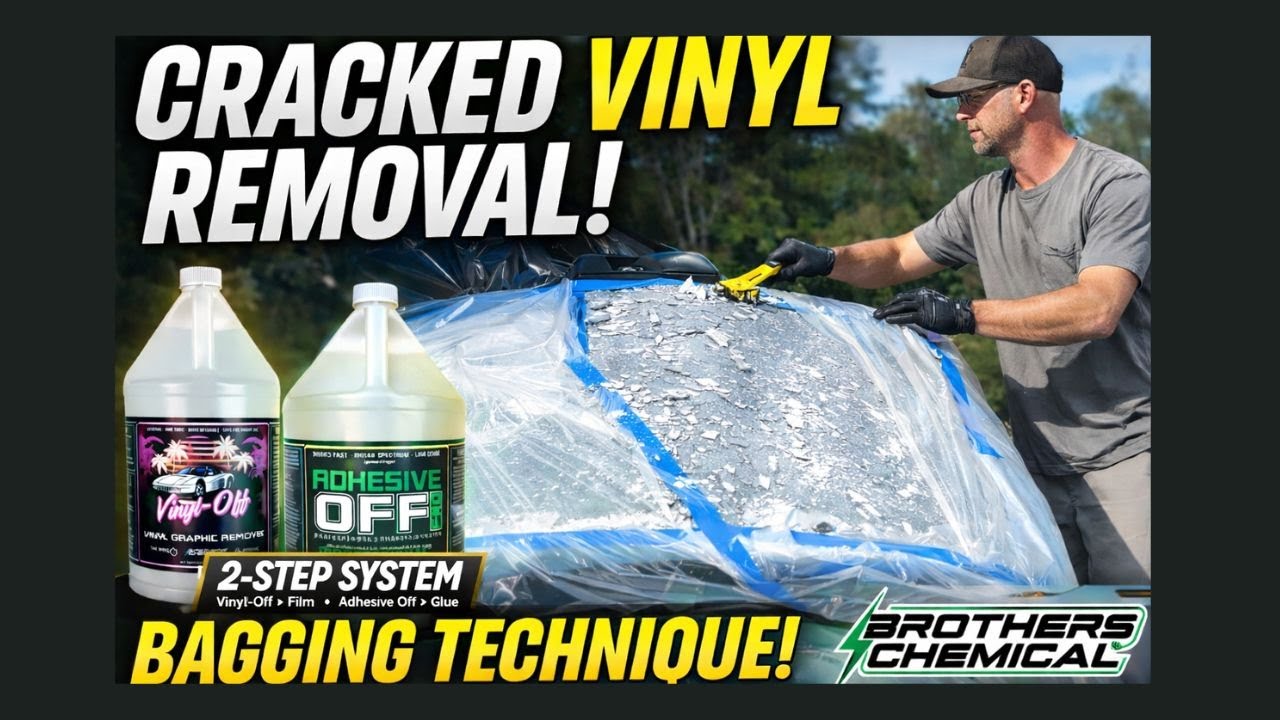
The Bagging Method
For the worst removals imaginable
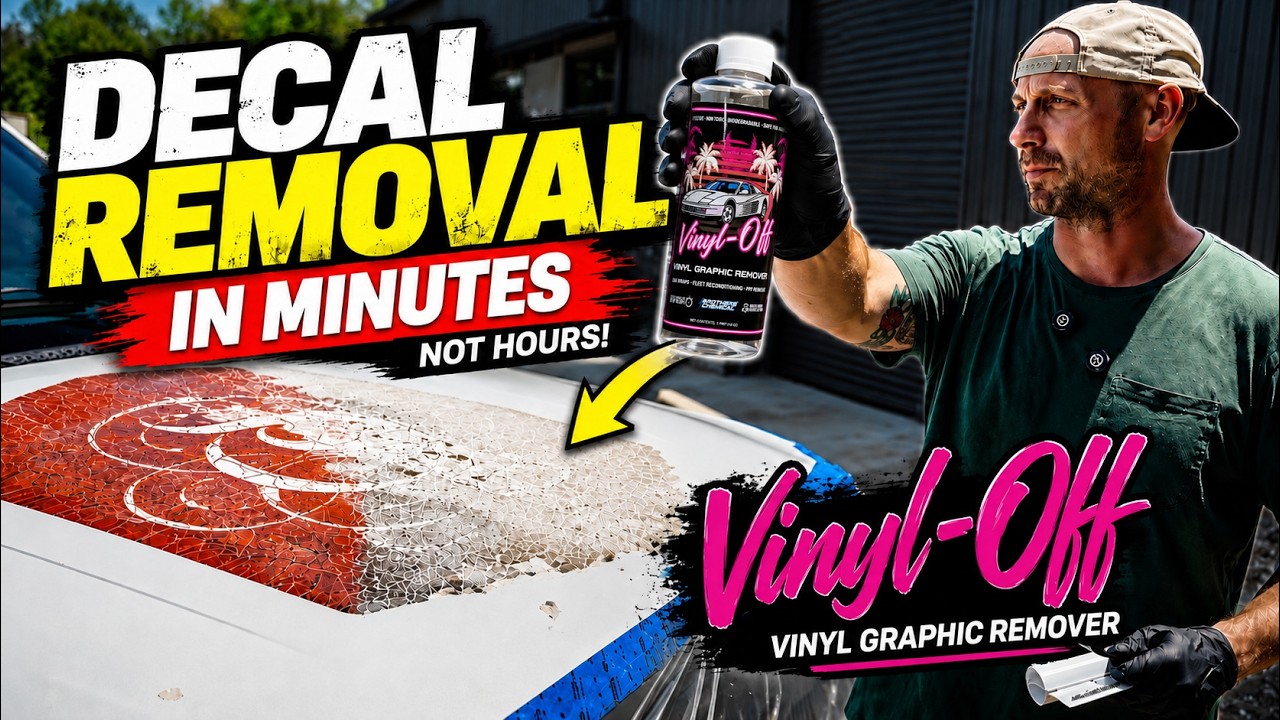
Cracked Hood Unwrap
Brittle Decal Removal on Hood
How Vinyl-Off Works

1. Apply & Dwell
Apply with a rag, brush, or roller directly to the film. Allow one minute.

2. Heat
Heat the film with a heat gun, torch, or infrared lamp.

3. Wipe Clean
Clean panel with isopropyl alcohol and a microfiber cloth
 After
After
 Before
Hear From The Pros

Vinyl-Off has completely changed how we handle wrap removals. We save hours on every job.

Best adhesive remover we've used. Performs cleaner than anything else on the market.
Vinyl-Off FAQ
Vinyl-Off penetrates the vinyl, softening it and reducing its adhesion to the surface beneath. This makes the vinyl easier to peel away in larger pieces, with the adhesive still attached.
Vinyl-Off is a ready-to-use, non-hazardous, nonflammable, biodegradable, non-toxic solvent. It does not contain petroleum distillates, caustics, acids, or butyl ethers and can be safely used indoors.
This can happen if Vinyl-Off becomes too aggressive. There are three common reasons for this:
1. Too much heat. The ideal working temperature is typically above 80ºF (28ºC).
2. Leaving the product on the surface too long.
3. Using too much product. A little goes a long way. Some people try reapplying more product to make the job easier, but more isn't always better!
In some cases, a layer within the vinyl prevents Vinyl-Off from reaching the adhesive. If this happens, you'll need to use an adhesive remover, ADHESIVE-OFF PRO to remove the remaining adhesive.
Vinyl-Off weakens the adhesive as it penetrates the vinyl, though this isn't always visible without magnification. If you're testing it on a new type of vinyl, compare your removal process with and without Vinyl-Off to see the difference.
Some older or reflective vinyls may have protective layers like polyester or metal that prevent Vinyl-Off from penetrating. In these cases, roughing up the surface with sandpaper may help, but usually this is a great application for Reflective-Off.
Vinyl-Off will not harm properly cured automotive paint, but always test it on a small, inconspicuous area first. There are many types of paint used in both manufacturing and aftermarket repairs.
Apply Vinyl-Off only to the vinyl you want to remove, and avoid letting it run onto surrounding areas. In some cases, Vinyl-Off may temporarily soften the paint, especially on recently painted or heavily oxidized surfaces. Once the product evaporates or is rinsed off, the paint typically returns to its previous condition. However, non-primed or improperly cured paint may be damaged.
It depends. Some reflective vinyls are made with metal flakes, which Vinyl-Off can work around to reach the adhesive. However, if the reflective vinyl has a solid metal layer, Vinyl-Off may not fully penetrate, leaving adhesive behind for a two-step removal process.
In these cases, roughing up the surface with sandpaper can help Vinyl-Off penetrate faster. This is where we recommend, Reflective-Off.


